


Graduate Athletic Training Program




About the Program
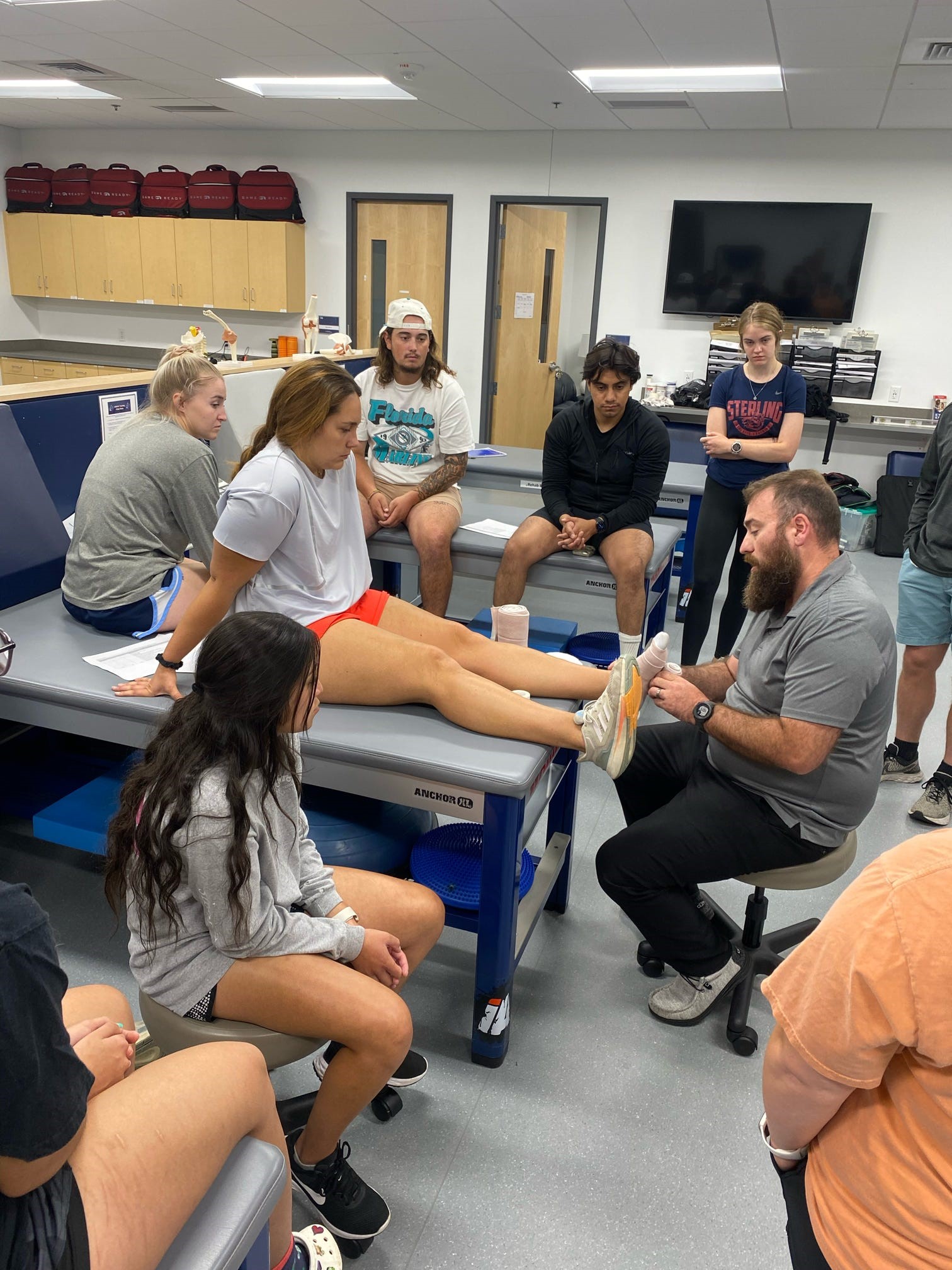
The Sterling College Graduate Athletic Training Program was developed to assist and nurture the spiritual, intellectual, physical and emotional growth of students into the field of athletic training. It is our goal to meet the needs of the students with active clinical participation, classroom instruction and interpersonal relationships.
Once a student enters into the graduate athletic training program, that student becomes part of the athletic training family at Sterling College.
With high expectations and rigorous educational standards, it is our objective to produce the finest Christ-minded and servant leadership-orientated athletic trainers in the country.
The graduate Athletic Training Program at Sterling College is accredited by the Commission on Accreditation of Athletic Training Education (CAATE). Sterling College’s request to change the degree level was approved in December 2017. The program is currently accepting applications to the Master of Science in Athletic Training Program.
For more information about the Master of Science in Athletic Training Degree, please contact Dr. Ryan “Pete” Manely, Program Director.
What Can I Do With This Major?
Athletic trainers (ATs) are highly qualified, multi-skilled health care professionals who collaborate with physicians to provide preventative services, emergency care, clinical diagnosis, therapeutic intervention and rehabilitation of injuries and medical conditions. Athletic trainers work under the direction of a physician as prescribed by state licensure statutes. The student, after successful completion of the program, is eligible for the Board of Certification Exam to become a certified athletic trainer. After passing the exam, possible job opportunities include: clinic outreach, secondary schools, college, professional, hospital, NASA, military, industrial and educational athletic training settings.
Additional Resources
- Articulation Agreements
- Applying to the program
- Admission Requirements
- Mission, Goals and Objectives
- Curriculum and Course Sequencing
- Retention Requirements
- Facilities
- History of the program
- CAATE Program Information and Outcomes Pages
- Student Handbook
Faculty

Professor of Athletic Training, Director of Graduate Athletic Training Program, Director of Athletic Training Services, Department Chair for Health Science


Associate Professor of Athletic Training

Assistant Clinical Professor of Athletic Training

Assistant Professor of Athletic Training

Assistant Clinical Professor of Athletic Training

Assistant Clinical Professor of Athletic Training

Assistant Clinical Faculty of Athletic Training

Assistant Clinical Professor of Athletic Training
Athletic Training Articulation & Accelerated Pathways
Sterling College’s Master of Science in Athletic Training (MSAT) program maintains articulation and pathway agreements with colleges and universities to provide students with a clear and intentional route toward becoming an athletic trainer.
While the details of each agreement vary, these partnerships are designed to simplify the transition into Sterling College’s MSAT program by identifying the coursework, academic expectations, and application requirements students need to complete along the way. Many of Sterling’s agreements also provide automatic acceptance opportunities for qualified students who meet the established requirements.
The major benefit of these agreements is that students can begin planning for graduate school early in their college careers. Rather than waiting until their senior year to determine whether they have completed the appropriate prerequisites, students can follow an established academic pathway while staying connected with Sterling College’s Athletic Training faculty.
Students are also encouraged to develop a relationship with the Sterling College MSAT program well before applying. Students and advisors at partner institutions may communicate directly with Sterling’s Athletic Training faculty to ask questions, review prerequisite coursework, and ensure students remain on track for admission.
Sterling College currently offers three types of Athletic Training pathways: 2+3, Accelerated 3+2, and Standard 4+2.
2+3 Pathway Community College to Sterling College
The 2+3 Pathway is designed for students beginning their college education at a community college who want an accelerated route to a graduate degree in Athletic Training.
Students complete approximately two years at their community college, including an Associate of Arts (A.A.) or Associate of Science (A.S.) degree and designated prerequisite coursework, before transferring to Sterling College. The pathway provides motivated students with the opportunity to complete three degrees, an associate degree, bachelor’s degree, and Master of Science in Athletic Training in approximately five years.
Students entering Sterling through this pathway receive an established academic plan designed to prepare them to apply to the MSAT program during their first year at Sterling. Required community-college coursework includes areas such as anatomy and physiology, biology, nutrition, health, psychology, care and prevention of athletic injuries, First Aid/CPR/AED, and foundations of health science.
The 2+3 pathway provides students with the potential for significant tuition savings by beginning their education at a community college while still providing an accelerated route toward completion of the professional MSAT degree.
Admission to Sterling College or the undergraduate Health Science program does not by itself guarantee admission to the MSAT program. Students must successfully complete the applicable academic and MSAT admission requirements.
Accelerated 3+2 Pathway
The Accelerated 3+2 Pathway is designed for students attending one of Sterling College’s four-year partner institutions that does not offer a professional Master of Science in Athletic Training.
Students spend approximately three years at their home institution completing the undergraduate curriculum and Sterling College MSAT prerequisites before transitioning to Sterling College to begin the professional Athletic Training program.
Students then complete the two-year Master of Science in Athletic Training at Sterling College. Through the pathway’s reverse-transfer agreement, applicable credits earned at Sterling are transferred back to the partner institution to complete the requirements for the student’s bachelor’s degree. Successful students therefore earn both a bachelor’s degree from their undergraduate institution and a Master of Science in Athletic Training from Sterling College in approximately five years.
Students pursuing the 3+2 pathway must maintain a minimum 3.0 cumulative GPA, earn a C or higher in required MSAT prerequisite courses, complete the required application materials, and remain in good disciplinary standing at their undergraduate institution.
Sterling College offers two qualified students per partner institution each year automatic acceptance into the MSAT program, provided they meet the requirements established in the 3+2 agreement. Admission prior to completion of the junior year is conditional upon successful completion of remaining academic and prerequisite requirements.
Standard 4+2 Pathway
The Standard 4+2 Pathway is designed for students who want to complete their bachelor's degree at one of Sterling College’s partner institutions before beginning the Master of Science in Athletic Training.
Students may complete a baccalaureate degree in any major at the partner institution as long as they also complete Sterling College’s required MSAT prerequisite coursework. Students typically apply to Sterling’s MSAT program during the final year of their undergraduate education and, following completion of their bachelor’s degree, transition to Sterling College for the professional phase of their education.
Qualified students must maintain a minimum 3.0 overall GPA, earn a C or higher in required prerequisite courses, complete the application process through ATCAS, document 50 hours of direct observation with a certified athletic trainer, and successfully complete an interview with the MSAT Admissions Committee.
Through Sterling College’s 4+2 articulation agreements, two qualified students from each partner institution per year are offered automatic acceptance into the MSAT program when all requirements of the agreement are met.
This pathway allows students to earn their bachelor's degree from their chosen undergraduate institution while having a clearly defined route into Sterling College’s professional MSAT program.
Which Pathway Is Right for You?
The pathway that works best depends largely on where you begin your college education:
- 2+3: Begin at a community college → transfer to Sterling College → earn an associate degree, bachelor's degree, and MSAT in approximately five years.
- 3+2: Complete approximately three undergraduate years at a partner four-year institution → transition to Sterling → earn both your bachelor's degree and MSAT in approximately five years.
- 4+2: Complete your bachelor's degree at a partner institution → transition to Sterling → complete the two-year MSAT program.
Regardless of the pathway, the goal is the same: provide students with a clear academic plan, an established relationship with Sterling College, and a direct pathway toward becoming an athletic trainer.
We maintain the following articulation agreements:
2+3 Pathway Community College to Sterling College
- Barton Community College
- Butler Community College
- Dodge City Community College
- Garden City Community College
- Hutchinson Community College
- Pratt Community College
Accelerated 3+2 Pathway
- Southern Nazarene University
Standard 4+2 Pathway
- Bethany College
- Defiance College (Ohio)
- Doane University (Nebraska)
- Fort Hays State University
- Hesston College
- Huston-Tillotson (Texas)
- Mid-American Nazarene University
- Southeastern University (Florida)
- Southwestern College